How a problem becomes your fault
Three times American companies changed what people thought a problem was about. Each time, the fix moved from the companies to the person.

Two words help explain how messages shape what we care about.
Framing is choosing which part of an issue people see. The communication scholar Robert Entman put it this way in 1993: “To frame is to select some aspects of a perceived reality and make them more salient in a communicating text, in such a way as to promote a particular problem definition, causal interpretation, moral evaluation, and/or treatment recommendation.” Put simply, a frame tells you what the problem is, what caused it, who is to blame and what should be done.
Priming is what repetition does. In News That Matters (1987), the political scientists Shanto Iyengar and Donald Kinder edited real newscasts so that one national problem got more time. Viewers who saw those newscasts gave that problem more weight when they judged the president. What you see most becomes what you measure by.
Here are three frames that worked.
The jaywalker
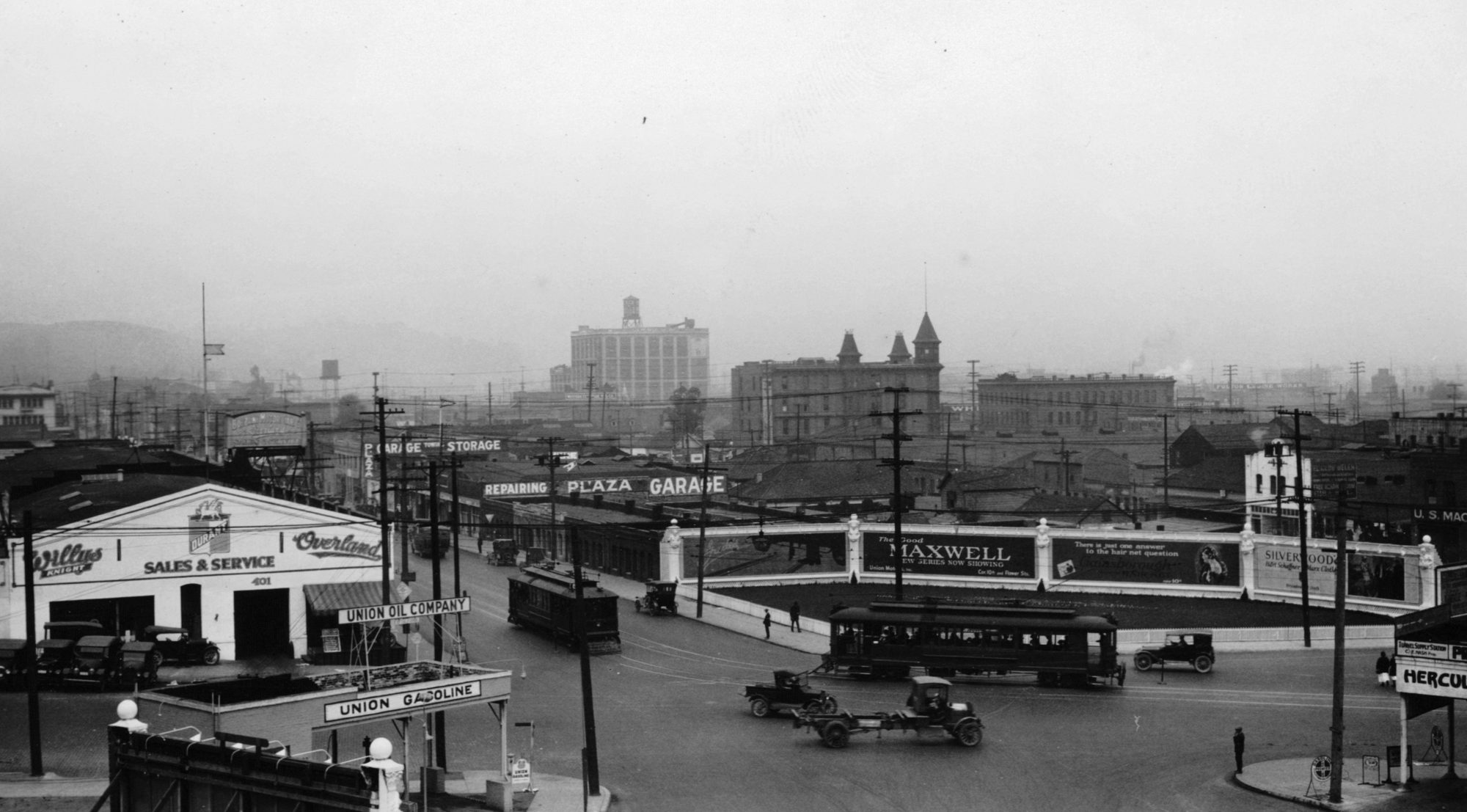
In the 1920s, cars were new on city streets. Auto clubs worked hard to stop the walking that slowed drivers down. The historian Peter Norton writes that in the slang of the time a “jay” was a rube, so a “jay walker” was someone who didn’t know how to walk in a modern city. Ridicule was a favorite tactic. The auto industry’s trade association ran a news service that blamed people on foot for their own injuries and deaths.
In 1925 Los Angeles passed a traffic law, written at the request of a Studebaker salesman, that limited where people could cross. In 1928 a U.S. Commerce Department committee, chaired by a Cadillac salesman, adopted a version of it as a model ordinance for cities across the country.
The question had been how to make streets safe for the people on them. It became why that person didn’t stay out of the road.
The crying man by the highway
Keep America Beautiful was founded in 1953 by the American Can Company and the Owens-Illinois Glass Company. Coca-Cola and the Dixie Cup Company joined later. In 1971 it put out a television ad in which a man dressed as a Native American paddles a canoe through polluted water, walks up to a highway, has trash thrown at his feet from a passing car and sheds a tear. The actor, Iron Eyes Cody, was Italian American. The ad’s line was “People start pollution. People can stop it.”
At the same time, the group’s leaders lined up against bottle bills, laws that would have made the companies take back their bottles and cans. The historian Finis Dunaway writes that the ad “deflected the question of responsibility away from corporations.”
The carbon footprint
From 2004 to 2006, the oil company BP ran an advertising campaign that, according to the climate researcher Geoffrey Supran, introduced and popularized the phrase “carbon footprint.” BP put a calculator on its website and pointed to it in its ads, so that people could work out their own share of the problem.
What the three have in common
Each frame is partly true. People on foot should look before crossing. Litter is ugly. The energy you use matters. A frame works because it is partly true.
What each one leaves out is the larger decision: how streets are built and who they are built for, what packaging can be sold, what energy is produced. Companies make those decisions, and so do laws. When a problem is framed as a personal failing, it stops looking like something we can decide together. That is where media literacy and democracy meet. A city council can redesign a street. A state can pass a bottle bill. A country can set rules for energy. None of that happens if everyone is busy feeling guilty alone.
Questions to ask when you read about an issue
- Who is this asking to change?
- Who isn’t mentioned?
- Who paid for this message?
- What feeling is it trying to raise in me, and what does it want me to do with that feeling?
- What would a public decision about this look like, and who would make it?
Sources
- Robert M. Entman, “Framing: Toward Clarification of a Fractured Paradigm,” Journal of Communication 43, no. 4 (1993), 51–58
- Shanto Iyengar and Donald R. Kinder, News That Matters: Television and American Opinion (University of Chicago Press, 1987; updated edition 2010)
- Peter Norton, “L.A. invented jaywalking tickets to serve cars,” Los Angeles Times, republished in Governing, October 2022
- Finis Dunaway, “The ‘Crying Indian’ Ad That Fooled the Environmental Movement,” What It Means to Be American
- Geoffrey Supran on “How Big Oil helped push the idea of a carbon footprint,” On Point, WBUR, December 2023