The Case for Peace at All Costs
Dred Scott and the Problem of Constitutional Evil by Mark Graber (Cambridge University Press, 2006) is a provocative interpretation of one of the most infamous Supreme Court rulings in American history. The ruling in Dred Scott vs. Sandford (1857), also known as simply Dred Scott, came down when sectional tensions over slavery were dangerously high, and, instead of calming them, only further polarized an already divided public. The broad ruling decided that American blacks “had no rights the white man was bound to respect,” and that Congress could not legislate on slavery in the United States’ territories. American constitutional law scholar and University of Maryland professor Mark Graber puts this vilified ruling to new purposes in this in-depth case study on the theme of constitutional evil, with a Hobbesian argument on constitutional failure.
As culture wars, in which each side claims the other is immoral, continue to dominate headlines and even Supreme Court decisions, this book arrives at a timely moment in US history. While focusing tightly on Dred Scott, Graber does acknowledge the contemporary cultural debates that his approach to Dred Scott could just as readily be applied to, such as those over abortion, capital punishment, and gun rights. Whereas an overwhelming majority of scholars commenting on Dred Scott deem it somewhere between irresponsible and cruel, Graber calls it a constitutionally legitimate, if not wise, attempt to save the peace. He argues that “Dred Scott challenges persons committed to human freedom to determine whether antislavery northerners should have provided more accommodations for slavery than were constitutionally strictly necessary or risked the enormous destruction of life and property that preceded Lincoln’s new birth of freedom.”
“…take seriously the possibility that they will achieve neither peace nor justice.”
Mark Graber
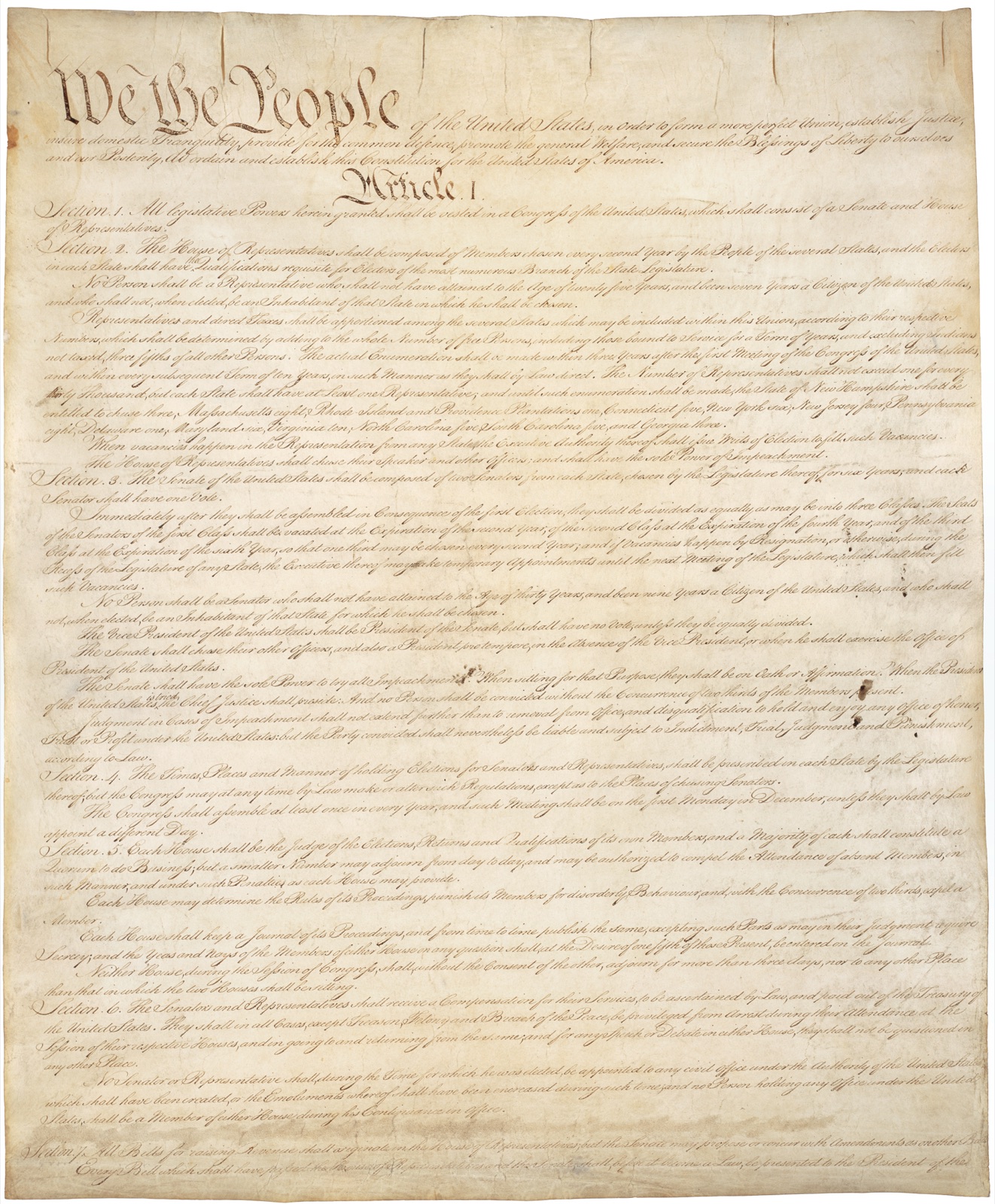
Anticipating objections, he robustly defends subsequent polemical assertions with constitutionally and historically sound research organized into three parts. In the first, he “rehabilitates” the decision, going deeply into its historical context, then three major interpretations of it, and finally his critique of those interpretations. In the second, he looks closely at how slavery made its way into the Constitution in the first place, discusses the document’s function as an instrument of compromise, and explains how, with a breakdown in national consensus on the Constitution’s original purpose regarding slavery, it ultimately failed to prevent civil war. In the third part, Graber critiques the Republican, especially the Lincolnian, approach to the Constitution, while comparing it to other valid approaches. The concept of constitutional evil, and allowing for it in order to preserve the peace, looms large in this part.
One of the intellectual pleasures in engaging with Graber’s argument is discovering several surprising insights into the nature of self-governance. Graber makes clear that in many cases it is folly for one group to believe itself morally superior to another when their world-views are irreconcilable and no objective absolute moral authority can be appealed to. One thus understands the necessity of all parties committing to uphold the Constitution as an instrument of compromise. Nonetheless, following in the tradition of Civil War scholars, Graber imposes his own world-view on the crisis, and this leads him to commit to premises that weaken his argument, most notably that the North should have, in the name of peace and in the guise of compromise, capitulated to a faction pushing constitutional evil beyond its strictly necessary limits in pursuit of an agenda that was ultimately fatal to self-government. Moreover, he fails to acknowledge that what gives the lie to his argument’s core premise is that he is willing to hold only the side fighting for freedom responsible.
Accepting his premise at face value that neither side could claim to be “right” about slavery, one wonders what his argument would have looked like had he discussed antislavery, rather than slavery, as the constitutional evil that the 1857 Supreme Court should have allowed the not-strictly-necessary spread of. Another of Graber’s oversights, especially in his treatment of Lincoln, is his failure to account for the fact that, by 1860, several southern states had committed themselves to leaving the Union, and that what they wished to pass off as compromise, the North considered capitulation. If Graber’s argument depends on the premise that maintaining the status quo was paramount to peace, then it is no wonder he does not acknowledge that doing so was no longer possible once a small Southern minority had hijacked several states from the Union, and attempted to seal the fates of nearly four million black Americans and their progeny into perpetual, and increasingly less humane, chattel bondage besides.
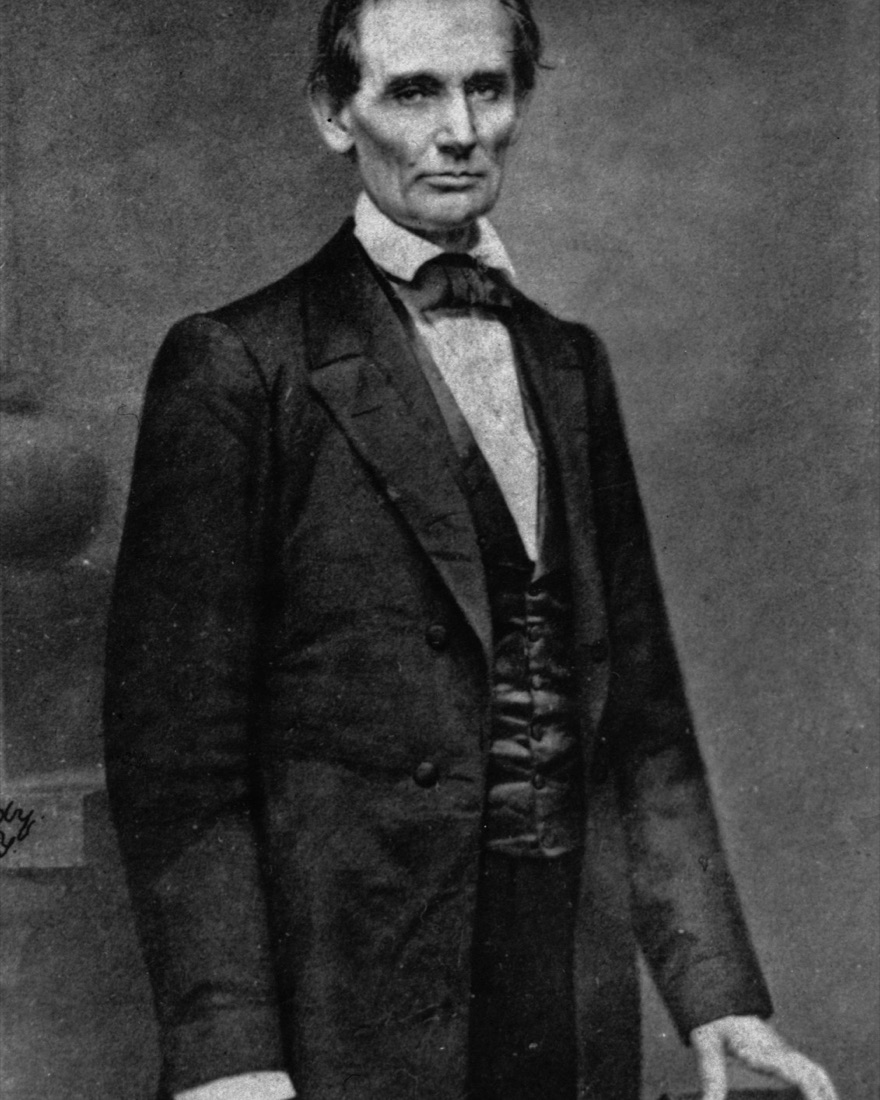 Abraham Lincoln, February 27, 1860, the day of his Cooper Union address. Photograph by Mathew Brady.
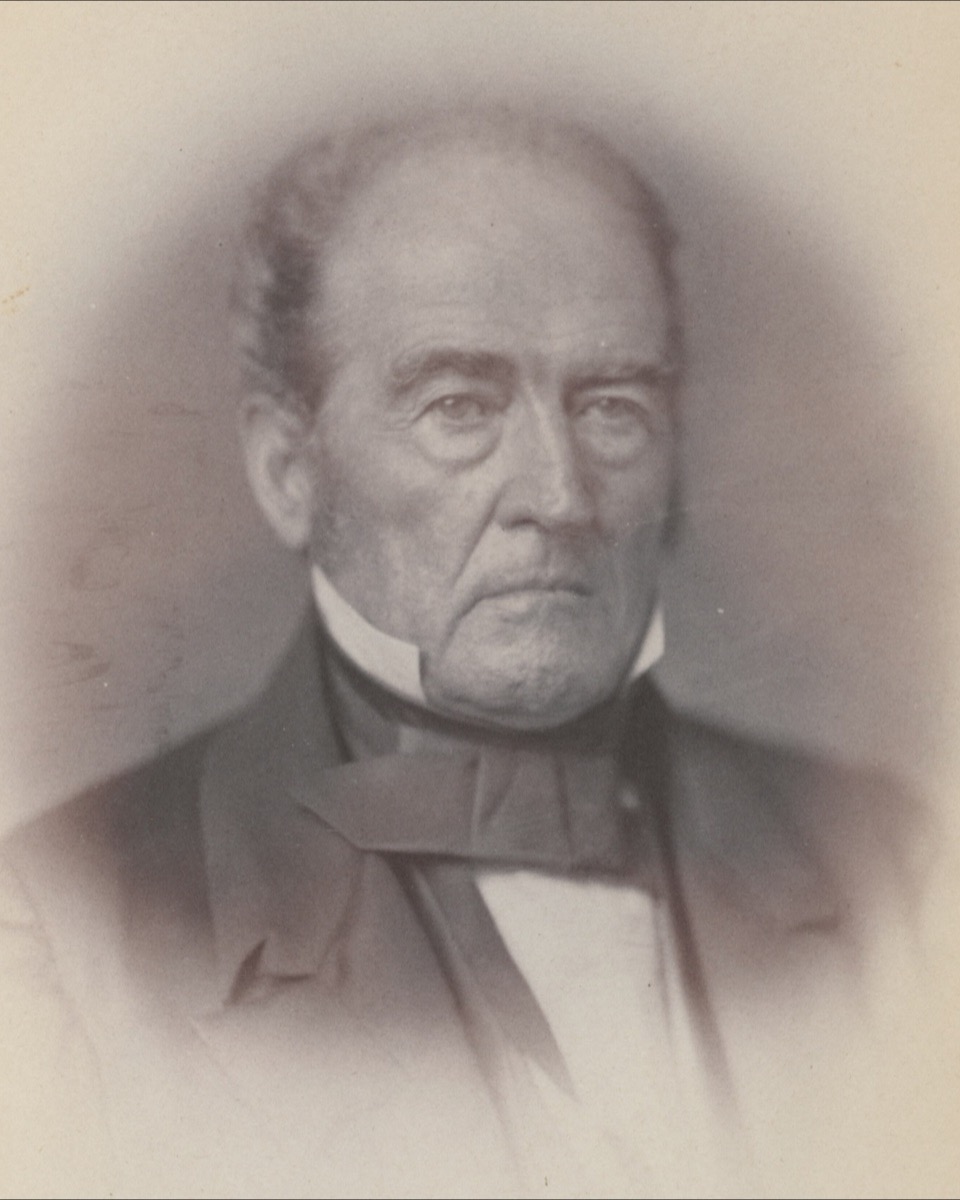 John Bell of Tennessee, about 1859. Photograph by Julian Vannerson. Library of Congress.
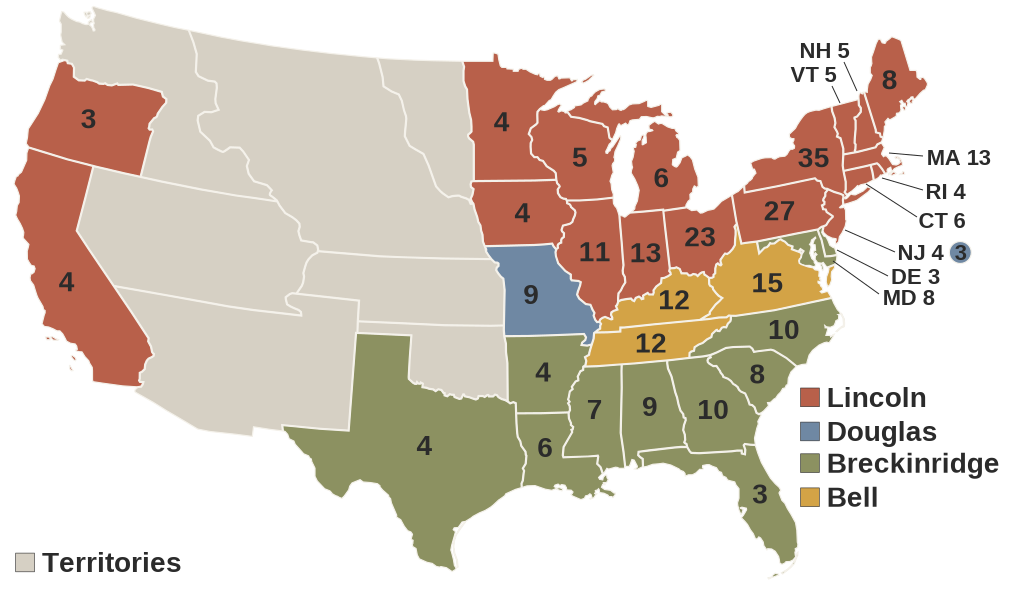
Finally, the fourth major fault in the book is that the proof of how far off the mark its “peace at all costs” idealism is, is unwittingly underscored by its conclusion, which upholds the 1860 election’s forgotten candidate, John Bell, as the ideal candidate, since he professed to remain entirely indifferent to the slavery issue. The degree to which Americans of all sections in 1860 overwhelmingly did not believe in John Bell should be the same degree to which the reader considers the real-world plausibility of Graber’s argument.
Nonetheless, the book is well worth careful consideration, and it makes for a more valuable contribution to Civil War, constitutional, and Lincoln scholarship than one more anti-Dred Scott argument or Lincoln hagiography would make. Graber is at his best when he presents his argument as something “persons committed to human freedom” should take seriously, yet not be expected to actually adopt. Readers will appreciate Graber’s refreshingly unadmiring critique of Lincoln’s constitutional approach to the sectional crisis and his exploration of different approaches which may have saved American lives. He points out the irrefutable fact that the North’s “justice” was purchased only with the lives of over 600,000 Americans, and that several “plausible alternatives” to a Lincoln-led Northern victory “remind citizens who contemplate risking the constitutional peace in order to achieve constitutional justice to take seriously the possibility that they will achieve neither peace nor justice.”
Peace without justice is a grave threat to legitimate self-government.
The book is at its most dangerous, on the other hand, when it seeks to present itself as a wiser replacement for that point of view which recognizes that there can be no real peace, much less a representative democracy, without a commitment to justice. Graber concludes with “The most difficult and important constitutional question Americans face today is the choice between … candidates committed to pursuing constitutional justice and candidates committed to pursuing constitutional peace,” making clear that he considers the candidate pursuing justice more of a fool than the one who pursues peace. Graber’s theory, in the final analysis, is only practical when applied to constitutional debates which remain inside the political system. But then, since those acting within the bounds of the system are already, by their very participation, preserving the peace as they do so, the argument must ultimately serve as no more than a reminder that peace without justice is a grave threat to legitimate self-government.
Reference
Graber, Mark A. Dred Scott and the Problem of Constitutional Evil. Cambridge Studies on the American Constitution. Cambridge: Cambridge University Press, 2006.